

e.max
Views: 4189
E.max Crown - Veneer
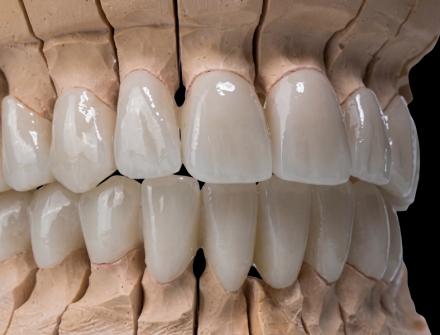
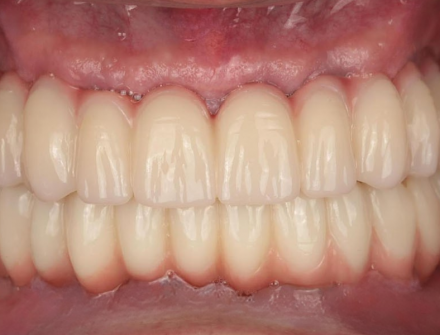
At Edentalab, our E.max Restorations are fabricated from advanced lithium disilicate glass-ceramic (IPS E.max CAD / Press), engineered to combine superior esthetics with excellent mechanical performance. Designed for both anterior and posterior restorations, E.max offers a balance between translucency, strength, and precision fit through a fully digital CAD/CAM workflow or traditional press technique.
Technical Specifications
| Material | Lithium disilicate (SiO₂–Li₂O–K₂O–P₂O₅–ZrO₂–ZnO–Al₂O₃) |
| Flexural Strength | 360–500 MPa (depending on fabrication process) |
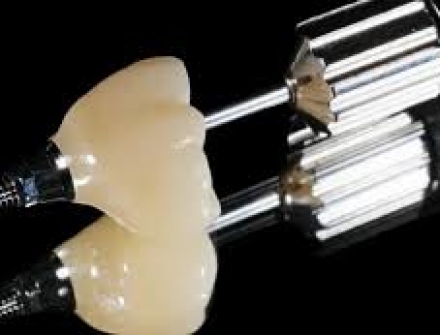
| Fabrication | CAD/CAM milling or pressable ingots with controlled crystallization cycle |
| Translucency | High — available in HT, MT, LT, and MO ingot shades |
| Cementation | Adhesive or resin-based bonding recommended for maximum retention |
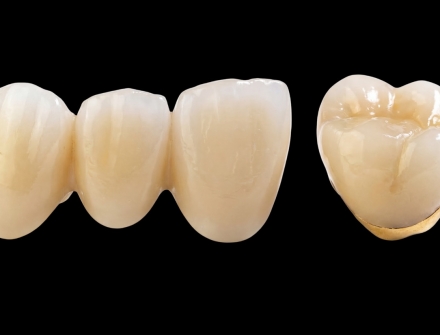
| Indications | Veneers, inlays, onlays, anterior and posterior single crowns |
| Thickness | 1.0–1.5 mm recommended for full coverage crowns |
Advantages of E.max Crown
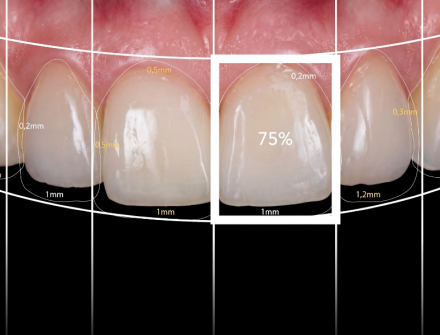
Excellent esthetics: lithium disilicate provide Natural enamel-like translucency and shade depth high translucency, natural opalescence and shade matching, making them ideal for visible zones
Versatility in indications: suitable for single crowns, veneers, inlays/onlays
Metal-free design: with no metal substructure, there’s no risk of a dark margin at the gumline, and better biocompatibility/allergy resistance
Strong material: flexural strength in the range of ~360-500 MPa for many blocks, making them reliable for many applications
Minimally invasive preparation: because the material is strong and can be bonded, it often allows for thinner preparations compared to some older ceramics.
Disadvantages of E.max Crown
Cost: typically higher than more conventional ceramic or metal-ceramic crowns because of material and processing demands
Thickness / strength limitations: although strong, E.max still has limitations compared to high-strength monolithic zirconia in very high-load posterior or long-span bridge situations
Shade/stump-blocking limitations: Because of its translucency, if the underlying tooth is very dark or stained, it may show through unless special block materials or masking techniques are used.
Technique sensitivity: Proper tooth preparation, bonding protocol and thickness are more critical for success; if these aren’t followed, risk of failure increases.
Limited bridge use in posterior: Literature suggests caution when using E.max for posterior large-span bridges because of higher forces and flexural loads.